This Wood Survived 10,500 Years Under a Lake. Why Didn’t It Rot Away?
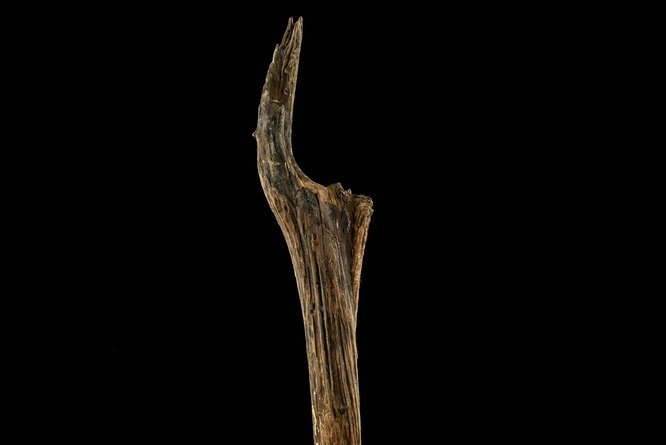
A worked post about 1.6 metres long from Lake Arendsee. Its original purpose remains under investigation. © Landesamt für Denkmalpflege und Archäologie Sachsen-Anhalt, Juraj Lipták.
A wooden post with signs of human working has survived roughly 10,500 years.
It came from Lake Arendsee in Germany, along with other worked timber. Today the finds lie about 20 metres below the surface.
Wood outdoors usually falls apart on a much shorter schedule. Yet the lake preserved details of prehistoric workmanship.
How can being wet for thousands of years help wood survive?
In partnership with

Free email without sacrificing your privacy

Gmail is free, but you pay with your data. Proton Mail is different.
We don’t scan your messages. We don’t sell your behavior. We don’t follow you across the internet.
Proton Mail gives you full-featured, private email without surveillance or creepy profiling. It’s email that respects your time, your attention, and your boundaries.
Email doesn’t have to cost your privacy.
Water can slow the wood’s destroyers
Waterlogged burial can limit the oxygen available to organisms that break down wood. Decay can continue, but it slows. Water also occupies spaces in the weakened structure, helping the object retain its shape.
That is why archaeologists can find wood in wet sediments when comparable timber elsewhere has vanished.
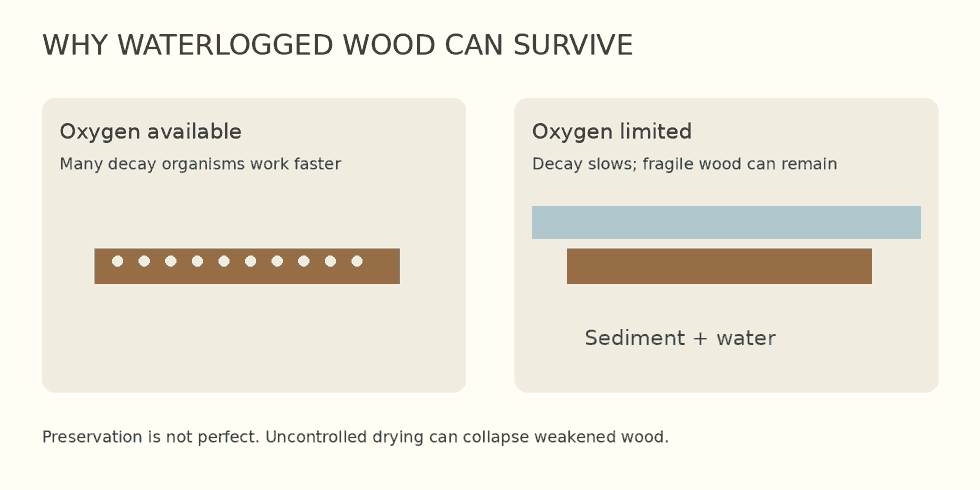
How low-oxygen waterlogged burial can slow decay, and why controlled conservation matters. Schematic: Fact Fest; based on Historic England’s conservation guidance.
A shoreline that sank out of sight
Arendsee adds a geological twist. Processes above a buried salt structure have lowered the lake bed. The ancient shoreline and its archaeological material now lie under a thin sediment layer at depth.
The finds include a worked post about 1.6 metres long and split boards up to 1.3 metres long. Whether they belonged to dwellings or another kind of construction is still being investigated.
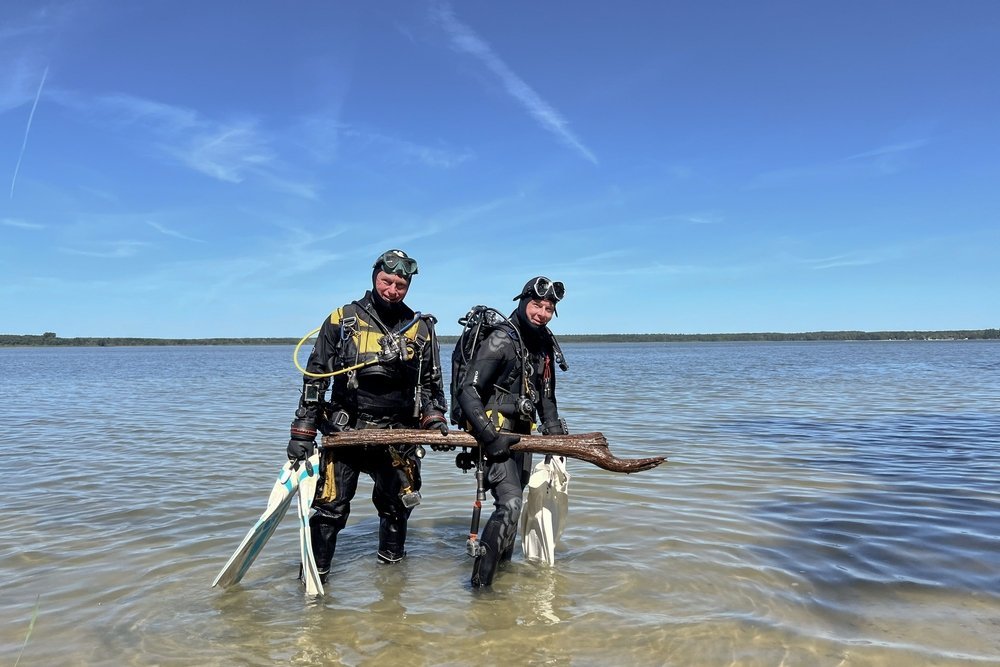
Recovering Mesolithic wood from Lake Arendsee. © Landesamt für Denkmalpflege und Archäologie Sachsen-Anhalt, Juraj Lipták.
Finding it creates a new problem
Preserved shape does not mean sound timber. Uncontrolled drying can make fragile waterlogged wood shrink, crack or collapse. Conservators keep it wet until treatment can protect it.
The lake preserved the evidence. Taking it out of the lake requires care to keep that evidence intact.
Sources
Why is Fact Fest free?
We find interesting things and send you one every day. Fact Fest is supported by advertising, which helps us keep finding and sharing more interesting stuff. Never any spam. Cancel any time.