In partnership with

This 99-Million-Year-Old Bug Had a Drinking Straw Nearly Twice Its Body Length
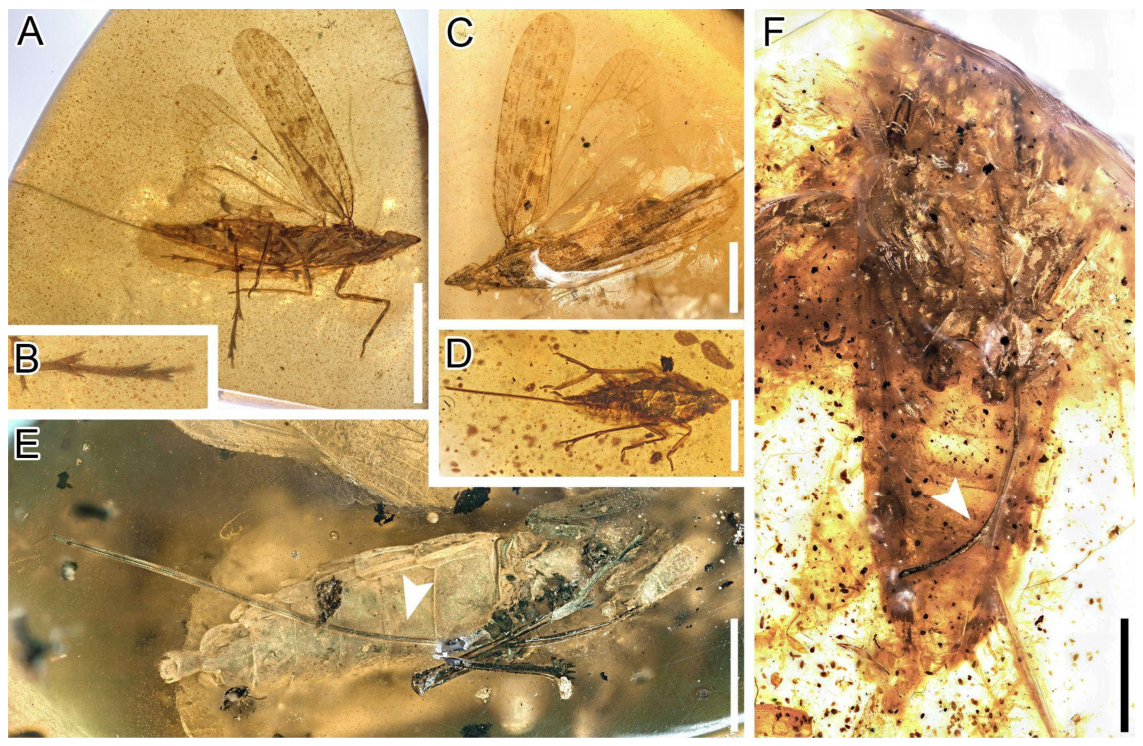
The actual Cretodorus noonoo specimens (A–D), with related insects showing curved mouthparts (E–F). Credit: Fabrikant et al., Insects (2026), Figure 2, CC BY.
A tiny insect trapped in amber had mouthparts nearly twice as long as its body.
That is an impressive reach. It is also an engineering problem: a long, thin feeding apparatus has to bend without folding shut.
Researchers named the 99-million-year-old insect Cretodorus noonoo, after the vacuum cleaner in Teletubbies. The resemblance is understandable.
But how did that ridiculous mouth actually work?
The bend was built into the sheath
The researchers found fine folds in the outer supporting structure, much like the corrugations in a flexible hose. They propose that these folds let it bend while resisting a kink.
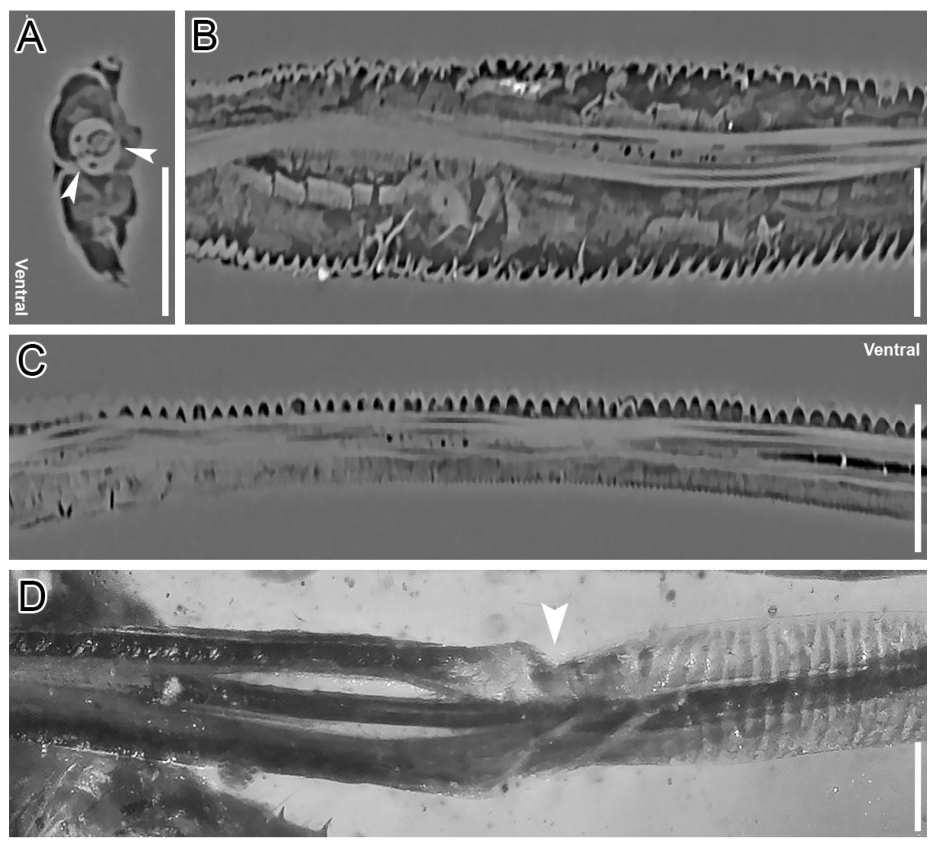
Photographs and micro-CT slices reveal the folded sheath in related Neazoniidae specimens. These are not all C. noonoo. Credit: Fabrikant et al., Insects (2026), Figure 4, CC BY.
There is a useful distinction here. A planthopper’s mouth is not simply an empty drinking straw. Slender feeding needles, called stylets, sit inside a supporting sheath called the labium. The needles do the piercing and feeding; the sheath helps position them.
In these extinct insects, that sheath had an unusually flexible final segment.
A long reach into a narrow place
Why carry such unwieldy equipment? The team suggests it could reach into bark crevices to access plant fluids. An elbow-like joint and the flexible segment would help bring the apparatus forward into feeding position.
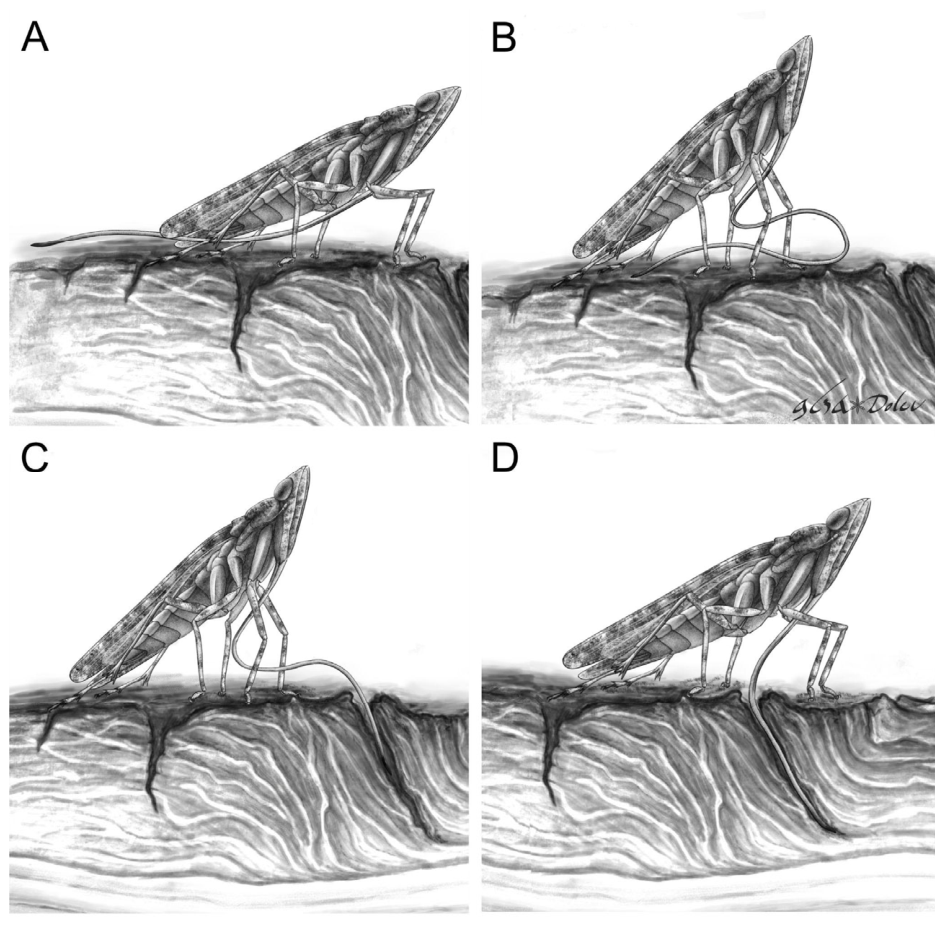
The authors’ proposed feeding sequence—not an observed behavior. Illustration: Dolev Fabrikant, Fabrikant et al., Insects (2026), Figure 6, CC BY.
The fossil preserves anatomy, not a meal in progress. The feeding sequence shown above is the authors’ reconstruction, and the resistance to kinking is a proposed mechanical function.
Even with those limits, the little insect offers a lovely glimpse of an extinct solution to a familiar problem: how to get a flexible tube around a corner.
Sources
Why is Fact Fest free?
We find interesting things and send you one every day. Fact Fest is supported by advertising, which helps us keep finding and sharing more interesting stuff. Never any spam. Cancel any time.