A Spacecraft Gained About 7,800 mph by Flying Past Earth. Where Did the Energy Come From?
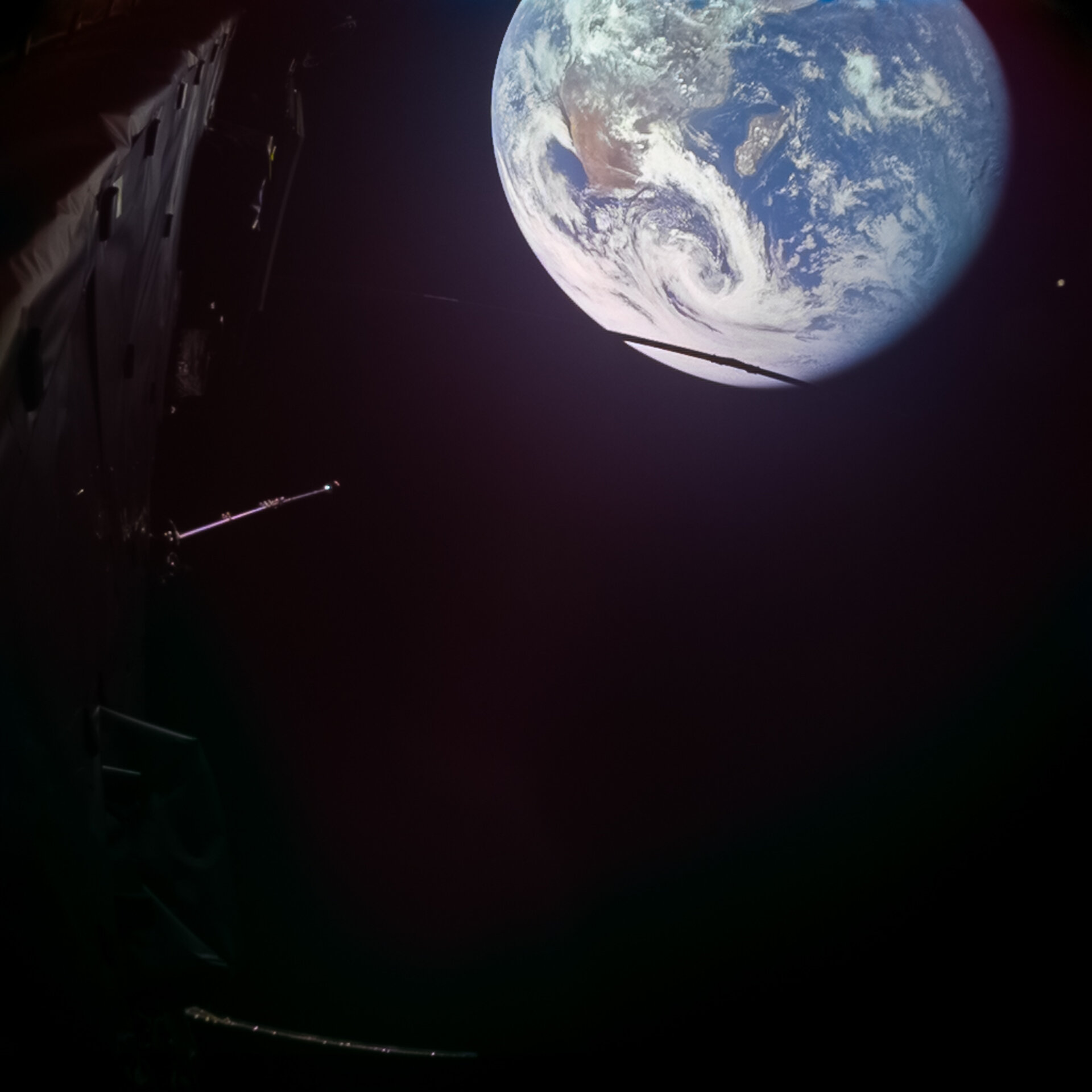
Earth photographed by Juice during its September 2026 flyby. Credit: ESA/Juice monitoring camera.
On September 28, 2026, the Jupiter-bound spacecraft Juice flew past Earth and gained about 3.5 kilometres per second—roughly 7,800 mph.
The maneuver used very little propellant.
That sounds suspiciously like getting something for nothing. Gravity pulls a spacecraft in, but shouldn’t it slow the spacecraft down again on the way out?
Where did the extra energy come from?
Earth was moving, too
The energy came from Earth’s orbit around the Sun. A gravity assist transfers orbital energy between a moving planet and a spacecraft.
Imagine a ball bouncing off a moving bat. The bat’s motion matters. A planetary flyby does the exchange through gravity rather than contact.
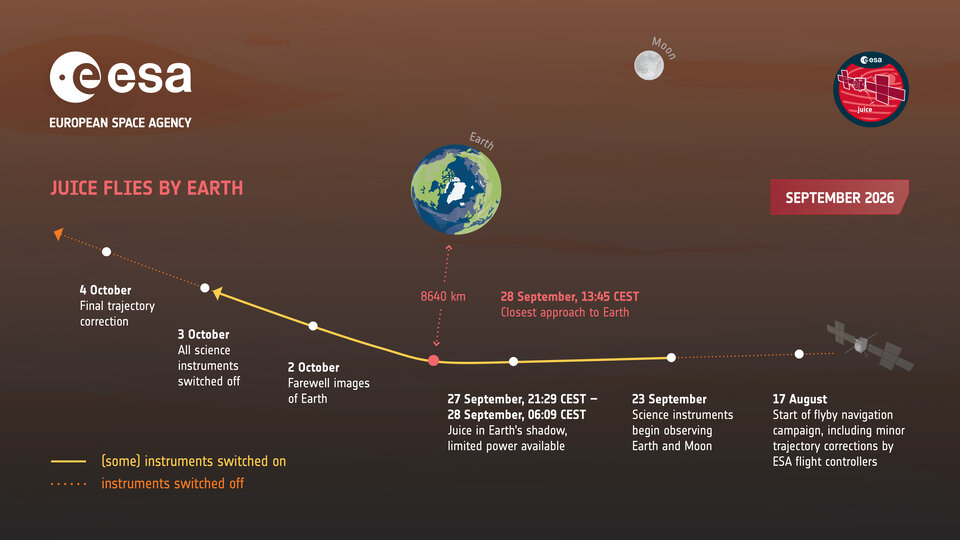
ESA’s plotted flyby path. The encounter changes the direction of Juice’s motion; Earth’s movement supplies the energy exchange. Graphic: ESA.
Change your viewpoint
In the idealized encounter, measured relative to Earth, the spacecraft approaches and departs with the same speed at equal distances. Gravity bends its path.
But Earth is moving around the Sun. From the Sun’s viewpoint, changing the spacecraft’s direction relative to that moving planet can change its speed and orbital energy. The approach geometry determines whether the spacecraft gains or loses energy.
Earth receives the opposite change. Because the planet is enormously more massive, its response is negligible.

Madagascar seen by Juice’s navigation camera during the flyby. Credit: ESA/Juice/NavCam.
Juice’s September encounter changed its direction by about 20 degrees. Careful navigation put it in position to benefit from the flyby; a small correction still used propellant.
The speed boost had a payer. It was Earth. Engineers arranged the encounter so the spacecraft could collect the benefit.
Sources
Why is Fact Fest free?
We find interesting things and send you one every day. Fact Fest is supported by advertising, which helps us keep finding and sharing more interesting stuff. Never any spam. Cancel any time.