Someone Was Enjoying Chocolate in Georgia, USA, 900 Years Ago. How Did It Get There?
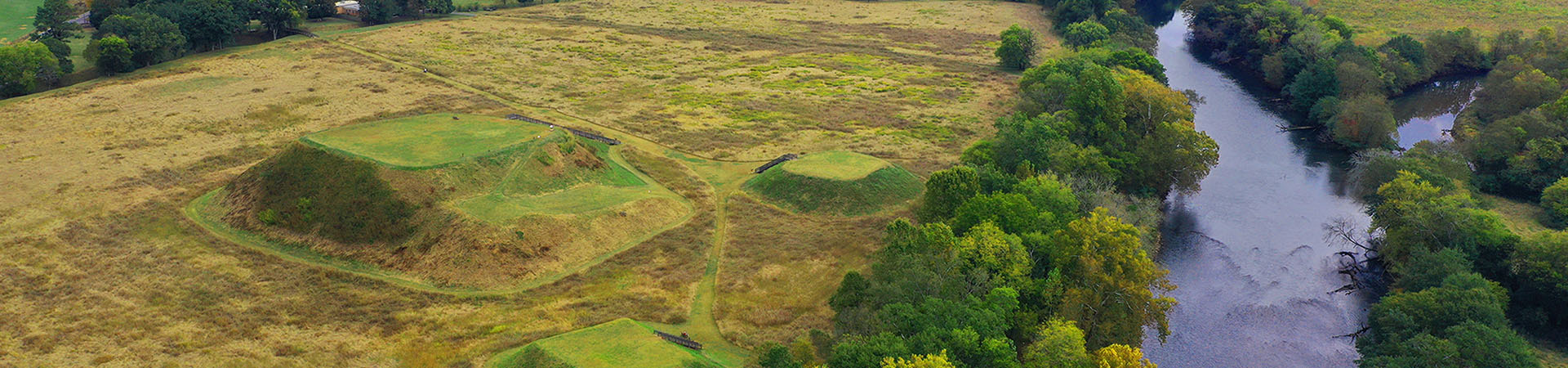
Etowah Indian Mounds in Georgia, the Indigenous city where the pottery was excavated. Photograph: Georgia Department of Natural Resources.
Who doesn’t love chocolate?
Apparently, people at the Indigenous city of Etowah, in the U.S. state of Georgia, knew cacao roughly 900 years ago. Ancient DNA in pottery provides the evidence.
Cacao is a tropical plant. Georgia is outside its growing territory. Someone had to bring it—or pass it along.
So how did it get there? And how can a broken pot tell us what people were consuming nine centuries ago?
The pot kept the plant’s fingerprint
Researchers identified fragmented ancient cacao DNA in residues associated with two pottery sherds from 11th–12th-century feasting contexts. That supports cacao consumption at Etowah, possibly in drinks.
The route it took remains unknown. The DNA answers what reached Etowah; it does not identify the traveler who brought it.
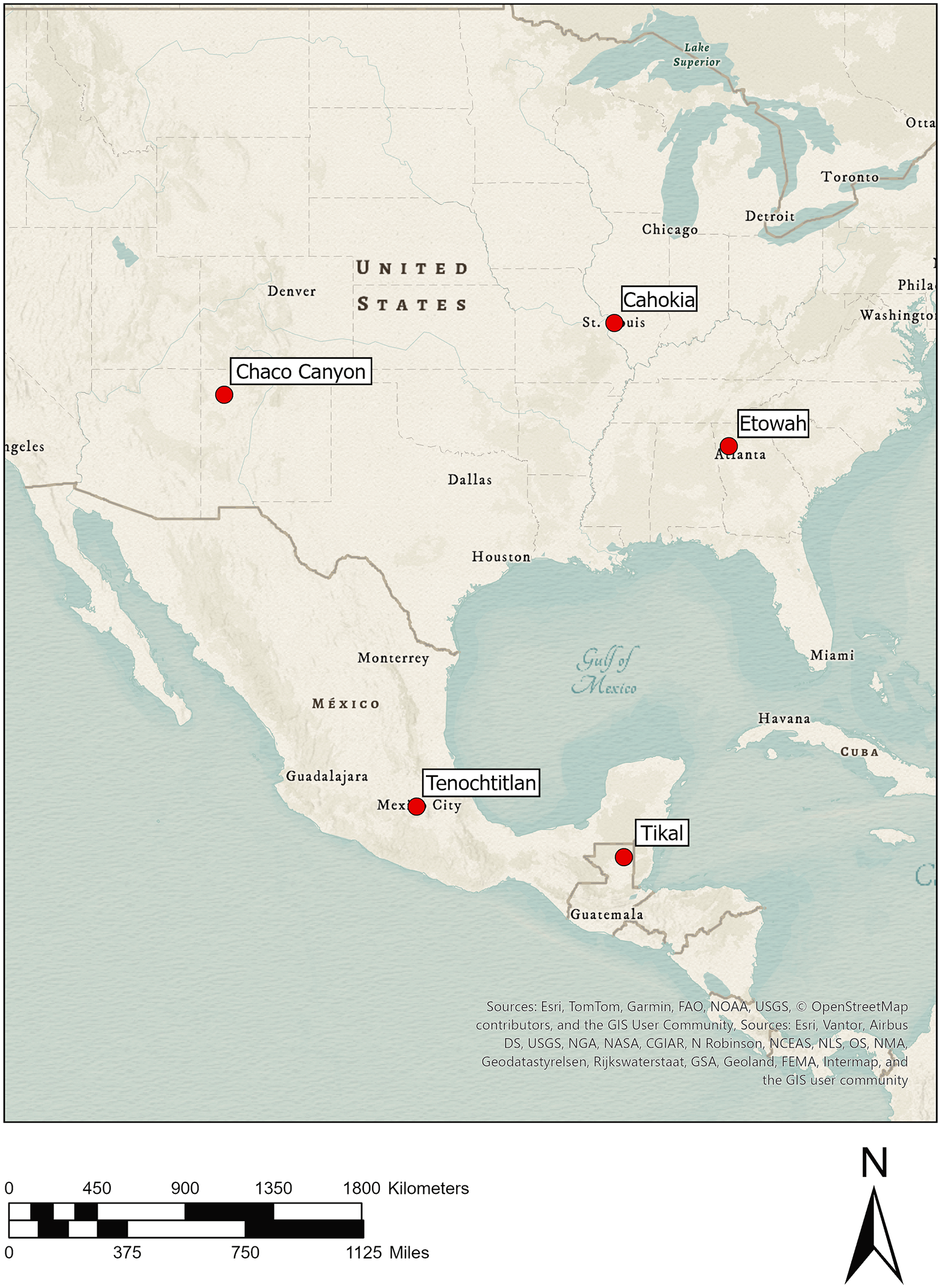
The study’s map locates Etowah and the regions discussed—not a reconstructed cacao trade route. Credit: King et al., PLOS One (2026), Figure 1, CC BY; map data © OpenStreetMap contributors.
The chemistry had a look-alike
Earlier chemical tests found compounds associated with cacao. But yaupon holly, a regional plant used to make a caffeinated drink, contains overlapping markers. Chemistry alone could not reliably separate the two.
The new analysis searched for sequences specific to cacao. The team also checked for the fragmentation expected in ancient DNA and used contamination controls.
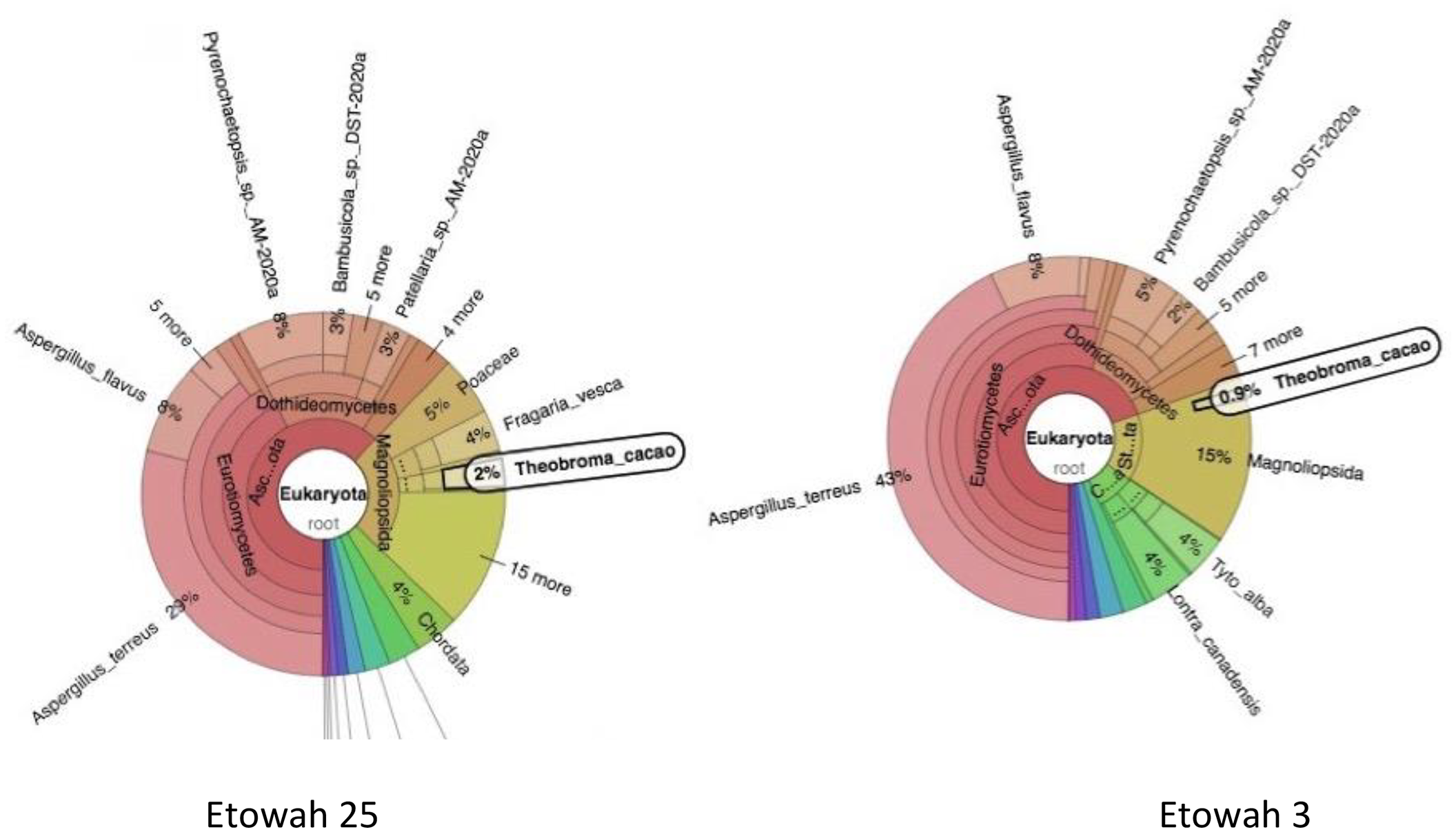
DNA classifications from two pottery samples. The tiny cacao portion is the evidence that chemistry alone could not provide. Credit: King et al., PLOS One (2026), Figure 2, CC BY.
This is evidence for cacao, not a surviving recipe for modern hot chocolate. We do not know precisely how it tasted or how it was prepared.
What we do know is delightful: a tropical plant reached an Indigenous city in Georgia long before European colonization. A few traces inside broken pottery made that connection visible again.
Sources
Why is Fact Fest free?
We find interesting things and send you one every day. Fact Fest is supported by advertising, which helps us keep finding and sharing more interesting stuff. Never any spam. Cancel any time.